
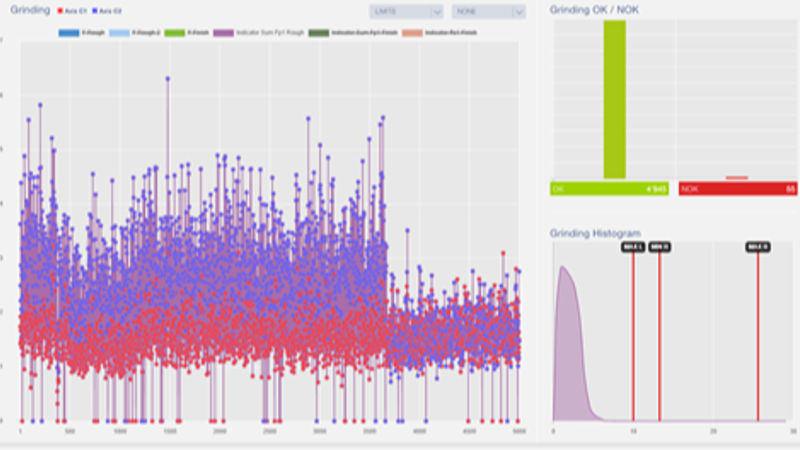
The automotive industry and its suppliers are undergoing profound structural change. Electrification, volatile markets and geopolitical instability, along with increasingly intense global competition, are creating high costs and innovation pressures across the entire value chain. These developments not only affect the general drivetrain components but also rotor shafts for electric motors, which combine high functional density with demanding manufacturing and quality requirements. Recent restructuring efforts, plant closures and bankruptcies have highlighted the need to critically reassess existing manufacturing concepts, especially for components such as rotor shafts with integrated functional elements. For automotive suppliers, technological capability and cost efficiency are no longer the only priorities; process robustness and investment security are increasingly moving into focus. New manufacturing solutions must not only be technically convincing, but also enable a substantial reduction in manufacturing costs, energy consumption, the associated CO2 emissions and process complexity (Refs. 1,2).


An excerpt from Gear Technology Solutions by Dr. Hermann J. Stadtfeld exploring the mathematics behind conjugate bevel and hypoid gears—from the fundamental laws of gearing and the conditions for perfect conjugacy to why real-world power transmissions require deliberate crowning rather than theoretically exact conjugate designs.
.
Leonardo Helicopters’ 20-year, 650+ test campaign characterizing tooth-root bending fatigue strength across gear materials, heat treatments, and finishing processes (notably shot peening and superfinishing) to support aerospace gear design.
.
Through loaded tooth contact analysis of two applications, this paper demonstrates that crown gears can match bevel gear load capacity while offering meaningful advantages in weight reduction, axial-force-free pinion mounting, and assembly simplicity.
.
This excerpt from Gear Technology Solutions explains how oversized cutter blade edge radii cause root interference in bevel gears, and how to select correct radii to avoid noise, flank damage, and tooth fracture.
.
The toothed belt and pulley system known by the designation T, which has been selected as an example within this paper, was developed in the 1950s and standardized first in DIN 7721 (1977) and then in ISO 17396:2014. In this case study, the authors check if a single hob can properly cut T5 profile pulleys with 25 and 30 teeth—and if
so, define the range of the number of teeth covered by this hob.

On the surface, it may not seem like the gear inspection industry has changed much over the last few years. Shops still primarily use either machines that are dedicated solely to measuring gears, or multiuse Coordinate Measuring Machines (CMMs). And regardless of which machine they use, software serves as the backbone that supports their many diverse sensors.


Advantages of induction hardening over carburizing, as prepared for the AGMA Metallurgy Committee.

Spiroid Gearing delivers precision gearing for advanced mechanical systems, engineered to handle extreme torque and complex motion requirements. With unique right-angle gear solutions, our technology enhances efficiency, reliability, and design flexibility - empowering engineers to push boundaries in aerospace, defense, robotics, and industrial applications where performance and durability are non-negotiable.

The demand for double helical gears in planetary gear systems for engines in the civil aerospace industry is increasing. Innovative grinding processes and state-of-the-art technologies ensure precision, reduced weight, and improved cost efficiency. Learn how KAPP NILES reduced the gap width from 30 mm to 15 mm.

Discover four diagnostic enhancement tools that move RX® endothermic gas atmosphere generator operations from preventative to predictive maintenance. Learn how monitoring dew point by retort, comparing equal flow, tracking tube performance, and measuring outlet temperatures prevent costly failures while ensuring consistent, high-quality carrier gas production.

The right hob can make a measurable difference in gear production. Watch the video to see how Star SU combines advanced hob technology with application expertise to help manufacturers get more from every gear cutting operation.

The Intra SFTX twin-spindle single-flank testing system is engineered for advanced gear quality testing and NVH analysis of demanding e-drive gear applications. Combining Transmission Error (TE) and Torsional Acceleration (TA) measurements, it delivers fast, precise diagnostics and detailed order analysis, quickly identifies critical gear issues, enhances traceability, and helps prevent costly defects from reaching end-of-line (EOL) testing.


The LC 280 DC gear hobbing machine from Liebherr is designed for precise gear cutting up to module 4.5 mm. It combines high productivity with advanced technology, featuring simultaneous FlexChamfer for efficient deburring and chamfering during the hobbing process.

New orders of metalworking machinery, measured by the U.S. Manufacturing Technology Orders Report published by AMT (The Association for Manufacturing Technology), totaled $732.9 million in August 2026.

Verisurf Software demonstrated Renishaw's new PH20 PLUS 5-axis touch-trigger probe head at IMTS 2026 in Chicago, running it with Verisurf's CAD-based inspection software. The PH20 PLUS has a maximum working length of 300 mm from the center of the A-axis. That is more than 50 percent more reach than the current PH20.
Jan 6, 2027 - Jan 9, 2027

Attracting a diverse range of professionals, including executives, engineers, designers, and entrepreneurs, CES (Las Vegas) is an excellent opportunity to connect, collaborate, and grow your professional network. The broad range of exhibits and industries represented at the show can inspire innovative solutions. Industries include 3D printing, AR/VR/XR, AI, cloud computing/data, construction tech, cybersecurity, robotics, e-Mobility, AI, vehicle tech and more.
Jan 18, 2027 - Jan 21, 2027
Nov 24, 2026 - Nov 26, 2026



Contact | Privacy Policy
©2026 Power Transmission Engineering






Current Issue
Current Issue
Archives
Subscribe
Buyer's Guide
Cutting Tools Gear Blanks & Raw Material Gear Drives Gear Machines Gear Manufacturing Services Gears Grinding Wheels & Abrasive Tools Heat Treating Inspection Equipment Lubricants Machine Tools Resources Services Software Used Machinery Workholding & ToolholdingThe Gear Industry Buyers Guide is your complete directory of suppliers in the gear industry, including great companies like these.
VIEW ALL